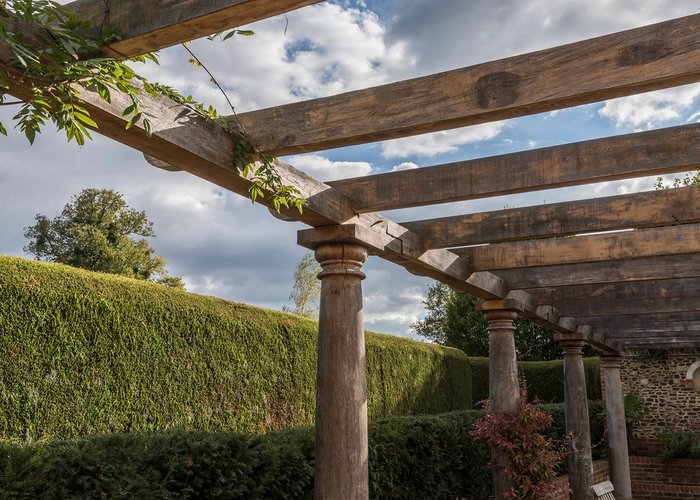

The decision between solid oak and engineered oak flooring depends on three environmental factors: the type of heating system you have, the level of ambient moisture, and the width of plank you want. Even though engineered boards offer excellent dimensional stability when used with continuous underfloor heating, 19mm solid English oak is still better suited to historic restorations, cases where a strong grain pattern is desired, and areas that experience occasional changes in humidity. Choosing the right type of construction will mean that your floor lasts for many generations without cupping, bowing or delaminating.
What Is the Structural Difference Between Solid and Engineered Oak?
Understanding the physical build of each timber format clarifies why they behave differently once installed:
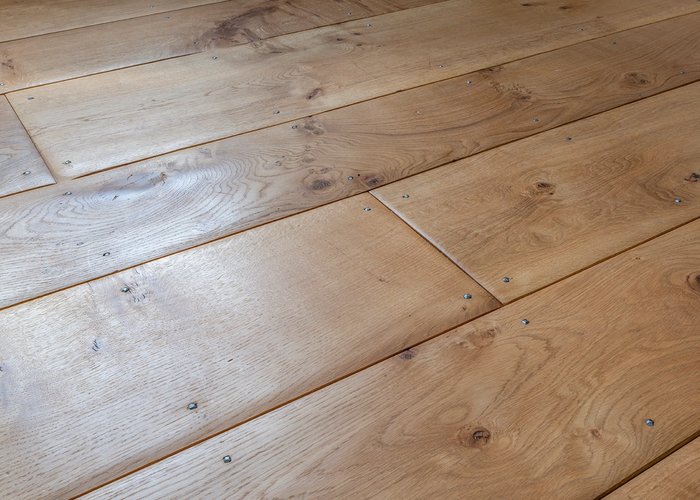
- Solid oak floorboards are machined from a single piece of timber, usually 19mm to 20mm thick. The fact that the whole section is made of natural timber means it retains its structural integrity even in the presence of irregular grain, large knots, and deep character marks.
- Single Engineered Oak: This consists of a solid hardwood wear layer (typically ranging from 4mm to 6mm) which is bonded to a cross-laminated birch multi-ply underlayer. The core that is oriented in different directions prevents lateral expansion and contraction over the width of the board.
- The Double Engineered Oak (also known as the 'Ply Sandwich') has a well-balanced build consisting of an oak top wear layer, an engineered multi-ply core, and a matching oak layer beneath it.
When Should You Choose Solid Oak Flooring?
In modern construction solid oak is often thought of as fragile, even though it is in fact the most durable option in certain architectural situations.
1. Heritage and Listed Renovations
When dealing with listed buildings and period restorations, it is usual to replace the timber with something similar to the original. Solid oak boards can be planed to a flat surface or finished with historic hand-worn profiles (for example, Whippletree Footworn oak) so they match the original 200-year-old boards perfectly.
2. Variable Humidity and Intermittent Heating
Multi-ply backing boards are susceptible in situations involving varying humidity, in unheated cellars below, or in buildings that are heated only on weekends. When the air is damp or cold, the plywood backing will expand at a different rate from the oak, and there is a risk of eventual delamination. However, solid oak reliably handles consistent airflow beneath the suspended joists.
3. Rich, Rustic Character and Wide Spans on a Budget
For knots and burrs to remain secured they need physical depth; heavy-character knots can come out during the process of slicing thin veneers for engineered boards, while solid timber of 19mm thickness is able to keep its rich and wild knots intact without affecting its stability.
When Is Engineered Oak Flooring the Better Choice?
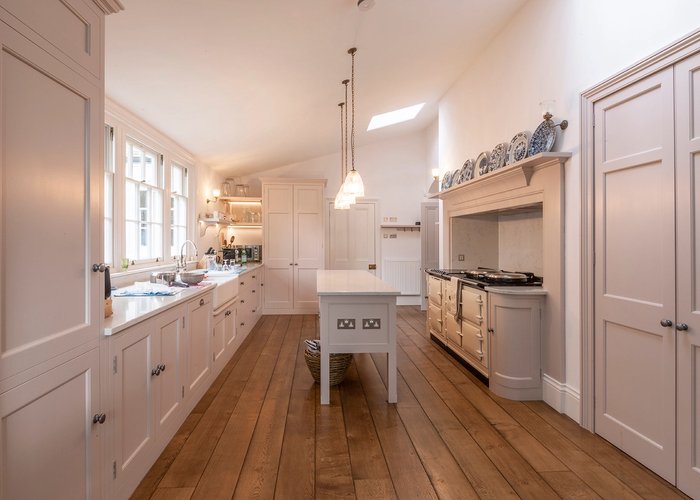
Timber that has been engineered is designed specifically to cope with modern building environments in which temperature and moisture are closely regulated.
| Consideration | Solid Oak (19mm) | Single Engineered | Double Engineered |
|---|---|---|---|
| Underfloor Heating (UFH) | Possible with strict commissioning | Excellent | Superior |
| Wide Boards (>220mm) | Prone to seasonal movement | Good | Exceptional stability |
| Subfloor Cellars / Damp Risk | High tolerance | Poor (plywood risk) | Poor (plywood risk) |
| Heavy Knots & Wild Grain | Retains full character | Cleaner, lighter grain | Cleaner, lighter grain |
| Lifespan | 100+ years (multiple sandings) | 40–60 years | 50–70 years |
1. Controlled Underfloor Heating
Underfloor heating supplies a constant, direct dry heat underneath the floorboards and the cross-laminated core of the engineered oak counteracts the wood's tendency to cup or shrink, thus keeping the joints tight during winter heating cycles.
2. Ultra-Wide and Long Formats
When the width of the plank exceeds 220mm and reaches 300mm the natural movement across the grain becomes greater. Double engineered oak counteracts this lever effect. The fact that two equal oak layers are placed on either side of the plywood core causes the opposing pulling forces to cancel each other out, thus keeping the wide planks flat.
Case Study: Specifying for a Grade II Barn Conversion
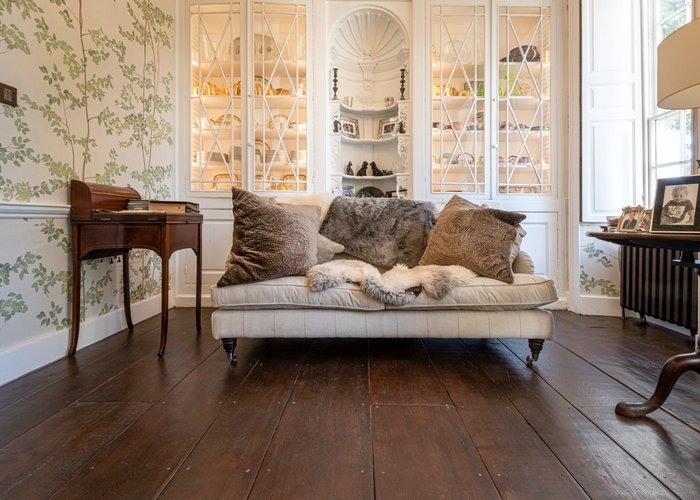
A recent barn conversion project illustrates how these two specifications work together in practice:
- Ground Floor (New Extension): The open-plan kitchen and living area had a new screed subfloor with wet underfloor heating, and a Double Engineered English Oak board (240mm wide) was chosen in order to achieve clean lines, stable joints when exposed to radiant heat, and minimal seasonal expansion.
- The hayloft on the first floor (original timber frame) had the upper floor positioned above an uninsulated carriage arch with fluctuating external airflow below it; 19mm solid English oak in a range of widths was fastened directly to the original joists and the solid build allowed the deep knots and rustic grain to be retained without there being any risk of the plywood deteriorating from ambient outdoor moisture.
Which Oak Flooring Format Matches Your Specification?
To settle your specification, evaluate your subfloor conditions and heating schedule:
- Choose Solid Oak when you are restoring a heritage property, when you are fitting boards over the joists with open sub-floor ventilation, when you are looking for heavy, rustic character knots, or when you want to avoid composite adhesives.
- If you are fitting standard-width boards over a screed in a house that is continuously warm and dry and has underfloor heating, then choose Single Engineered Oak.
It is still essential to acclimatise the timber on site before fitting, whatever the method may be; matching the timber structure to the physical conditions of the site will ensure that your English oak floor performs perfectly for many decades.